









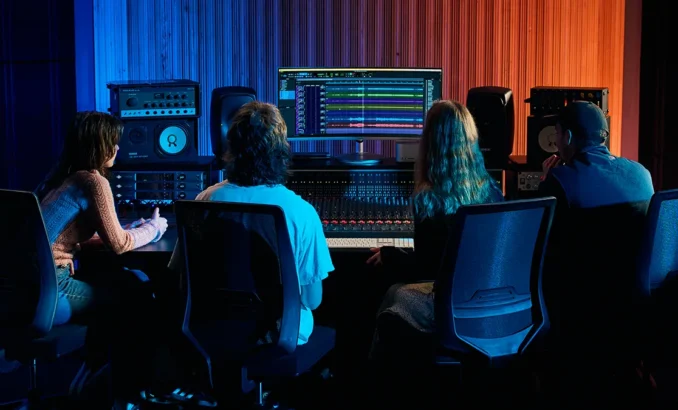




Associate Degree of Information Technology
Technical skills shaped by creative thinking
Build on your technical foundations and explore areas such as cloud computing, databases, analytics, and web development. Apply your skills through client-based projects as you prepare for industry roles or further study.
Apply your knowledge through client-based and collaborative projects that strengthen your problem-solving, communication and teamwork skills. Graduate with practical experience developing technology that responds to real user and business needs.
- Online
- Sydney
On-Campus
Ideal for students who thrive in a face-to-face environment with access to studios, peers, and in-person support.
- Includes 2 hours of weekly on-campus classes plus 1 hour of national content (online or asynchronous).
- Classes run Monday to Friday, morning, afternoon, and evening, with access to digital resources and support.
- Perfect for hands-on learning, collaboration, and real-time feedback.
Blended Delivery
Designed for those who want the best of both worlds, structured face-to-face learning with online flexibility.
- Combines 2 hours of live (on-campus or online) classes with 1 hour of national content each week.
- Balances in-person connection with the convenience of remote access.
- Supported by SAE’s online learning tools and self-directed study resources.
National Expertise
No matter how you study, you’ll learn from SAE’s national team of expert, industry-aligned faculty.
- Access top educators and specialists across Australia, wherever they’re based.
- Benefit from national masterclasses, guest lectures, and collaborative learning.
- Tap into deep industry knowledge that goes beyond your local campus.
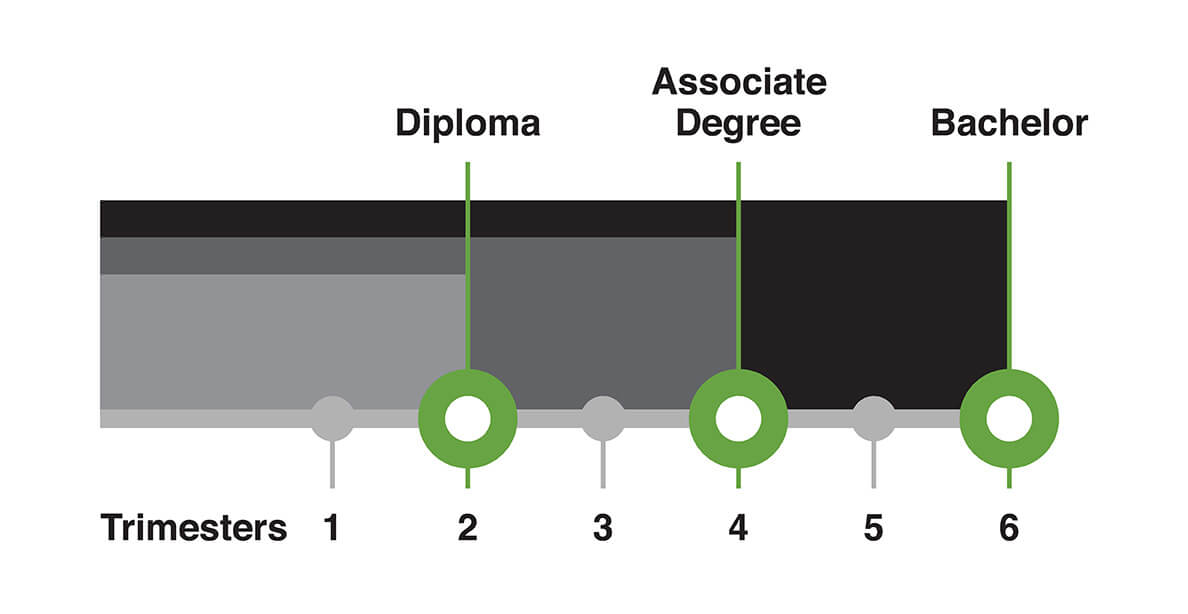
Complete your course faster by studying units over 15 months (4 trimesters).
Complete your course faster by studying units over 15 months (4 trimesters).
Whilst still classified as a full-time study load, you will complete the units over two years (6 trimesters).
If you want to take a little longer, that’s ok too. We’ll help you work out the best study load to suit your needs.
Note: Part-time is not available for international students.
February 2027
May 2027
February 2027
*FEE-HELP Available
Units x Costs ($AUD)
16 x $3,149
Annual Course Fee (Indicative)*
(based on 1.0 EFTSL**)
$25,192 AUD
Plus Student Services and Amenities Fee (SSAF)
* The Annual Course Fee (Indicative) is charged against individual units of study which may increase from time to time and does not take into account personal circumstances such as RPL, credit, repeats and some specialised electives.
** EFTSL (Equivalent Full-Time Student Load) is a measure of a full-time student’s study load for a year. A full-time study load equates to 1.0 EFTSL. Typically, a full-time study load at SAE is 8 units of study over the year, each with an EFTSL value of 0.125.
For more information view the SAE Fee Schedule or visit the Fees & Payment page.
Units x Costs ($AUD)
16 x $3,705
Annual Course Fee (Indicative)*
(based on 1.0 EFTSL**)
$29,640 AUD
Plus Student Services and Amenities Fee (SSAF)
* The Annual Course Fee (Indicative) is charged against individual units of study which may increase from time to time and does not take into account personal circumstances such as RPL, credit, repeats and some specialised electives.
** EFTSL (Equivalent Full-Time Student Load) is a measure of a full-time student’s study load for a year. A full-time study load equates to 1.0 EFTSL. Typically, a full-time study load at SAE is 8 units of study over the year, each with an EFTSL value of 0.125.
For more information view the SAE Fee Schedule or visit the Fees & Payment page.
Your technology career starts with SAE
Course Structure
This subject serves as your gateway to understanding how humans and computers interact effectively. Here, you will explore the fundamental principles of HCI that underpin all user interfaces, from the ones on your phone to complex software applications. We will delve into various interaction methods, including traditional desktop interfaces, mobile technologies, and even emerging concepts like tangible objects and ambient displays.
This unit introduces you to the fundamental concepts and techniques of programming using a high- level programming language. You will learn to write, debug, and execute basic programs while developing problem-solving skills essential for computer science. The unit covers variables, data types, control structures, functions, data structures, file input/output (I/O), modules, error handling, and an introduction to object-oriented programming. By the end of the unit, you will be able to develop simple programs and understand core programming principles.
This unit provides an engaging and practical introduction to the fundamentals of software development, focusing on the concepts, methodologies, and processes involved. Students will learn about the software development lifecycle, various development methodologies, version control systems, teamwork, project management, and the importance of documentation. The unit is highly interactive, featuring a mix of case studies, group activities, and hands-on projects that simulate real-world software development scenarios.
This unit focuses on the fundamental knowledge and skills required by all IT professionals. You will explore basic IT concepts and terminology as well as the hardware and software elements that form the basis of systems from personal computing through to enterprise level. You will also explore how software is developed and used, and the collection, storage and use of data. All these topics will be viewed through a cyber security lens and the unit will conclude by considering the field of cyber security as a holistic discipline.
This unit explores the concepts of entrepreneurship, innovation and project design. You will develop approaches to identify promising opportunities and actionable strategies to transform them into tangible successes. Through exposure to developing new ideas, processes and ways of working - both individually and in entrepreneurial teams - you will hone skills to put creative ideas into practice and achieve real-world impact.
As Alan Kay explained, "The best way to predict the future is to create it", so let's get at it!
This unit explores scripting and automation techniques, and their application in areas such as system administration and data extraction. You will learn to use scripting for automating tasks, managing system operations, and extracting data from the web. The unit also introduces the Internet of Things (IoT) and programming on microcontrollers. You will gain hands-on experience with sensors, actuators, IoT networking and communication, and basic security practices. The practical focus of this unit prepares you to design, implement, and manage automated and IoT systems effectively.
Learn to investigate business needs, model systems, document requirements and design technology solutions that improve processes, users’ experiences and organisational outcomes.
This unit will introduce you to foundational knowledge and skills for web development which will be useful throughout your studies and career in computer science. You will learn foundational concepts, principles and skill in web development. We will delve into the core concepts of the Document Object Model (DOM), Hyper Text Markup Language (HTML) and its companion Cascading Style Sheets (CSS), and an industry-standard programming language for websites: Javascript. Explore concepts of web design theories and practices including web servers, web databases, web domains, Content Management Systems, web design, web layout, responsive web design, functionality and usability.
Use analytics tools and business intelligence techniques to transform organisational data into insights, dashboards and evidence-based recommendations for decision-making.
Design, build and query relational databases, applying data modelling, normalisation and SQL to support secure, reliable information management.
Apply technical and project management skills to a client brief, collaborating to analyse needs, develop solutions and present professional outcomes.
This course introduces students to the dynamic field of cloud computing. Through a blend of theoretical understanding and hands-on practice, students will grasp the basics of cloud computing, including virtualisation, service models (IaaS, PaaS, SaaS), and the principles driving cloud adoption. Using platforms like AWS, Azure, or Google Cloud, students will learn to provision virtual machines, configure networking, and manage storage. They’ll delve into cloud security, covering identity management, encryption, and compliance. Additionally, leveraging microservices, containers (e.g., Docker, Kubernetes), and serverless computing (e.g., AWS Lambda), students will design and implement scalable, resilient, and cost-effective cloud-native solutions.
Study cyber security frameworks, risk management, threat detection and practical controls that protect systems, data and users in contemporary organisations.
Work in development teams to plan, build, test and deliver software solutions using collaborative workflows, agile practices and professional communication.
Examine the legal and ethical responsibilities of cyber security professionals. Learn about national and international laws, plus the moral considerations of working with sensitive digital information.
Use programming and analytics tools to uncover insights from cyber security data. Learn to detect threats, monitor systems, and support decision-making with real-time analysis and visualisation.
Explore the cyber threat landscape and how to detect, prevent and respond to attacks. Build on your foundational knowledge while preparing for the CompTIA Security+ certification.
This unit covers the essential aspects of software testing and reliability engineering. Beginning with foundational principles, you will learn various testing techniques and how to design effective test cases and plans. You will develop practical skills through the execution of projects that focus on integration testing and regression test suite development. Later topics include software reliability engineering principles, statistical methods for analysis, and strategies for improving system reliability.
In order to become a ‘full stack’ web developer, you will need to be skilled at both front-end and back-end web development. Where ‘front-end’ web development focuses on the aspects of websites without a database, back-end web development focuses on the use and interaction of a website database. This unit will build upon prior learning in front-end web development, programming and databases. To further develop and refine your knowledge and skills in web development, this unit will delve further into the theories and practical applications of web development for dynamic websites that use database interaction in addition to asynchronous website dynamics using a combination of Javascript and PHP.
Use DevOps practices to automate, test and deploy applications in cloud environments, supporting continuous integration, delivery and reliable operations.





What to expect when studying an Associate Degree of Information Technology at SAE
Take your technical skills further with an associate degree that combines practical learning with industry-inspired projects. As your expertise grows, you’ll work with cloud technologies, databases, cyber security and analytics while collaborating on client-focused and team-based projects that mirror professional practice.
Strengthen your ability to solve complex challenges, communicate technical ideas and develop technology solutions that respond to real user and business needs.
Graduate with a portfolio of practical work and the confidence to continue into further study or begin your career in technology.
Meet your technology mentors
Meet your technology mentors
Gain insider knowledge from trusted experts shaping today’s tech landscape.

Associate Professor Robert Haubt - Head of School, Information Technology and Creative Computing
Robert is an interdisciplinary educator and researcher with over 20 years’ experience spanning computer science, creative media, the arts and human evolution. As Head of the School of IT & Creative Computing, he explores how creative practice and technology inspire innovation, empower communities, support sustainability and advance social equity through collaboration.

Founder of the Global Rock Art Database, the world's first centralised platform for global rock art research

Held research fellowships at Griffith University and Macquarie University in Digital Technologies

Developed machine learning applications addressing the UN Sustainable Development Goals
Meet your technology mentors
Gain insider knowledge from trusted experts shaping today’s tech landscape.

Dr Hamid Bagha – Lecturer, Computer Science
Hamid works across software engineering, data analytics and research-driven innovation, bringing advanced technical expertise and real-world applications into his teaching. With a PhD in Engineering and IT, his project-based approach helps students connect programming concepts with practical challenges while developing the technical skills, problem-solving capabilities and professional workflows needed for careers in a rapidly evolving technology industry.
Developed an IoT-based system to analyse vehicle emissions using data-driven technologies

Holds a PhD in Engineering and IT from the University of Melbourne and a Master by Research in ICT from Swinburne University of Technology
Recipient of Swinburne’s Vice-Chancellor’s Early Career Researcher Award and recognised for research contributions to Science, Computing and Engineering Technologies
Meet your technology mentors
Gain insider knowledge from trusted experts shaping today’s tech landscape.

Dr Ping-I (Adam) Ho – Senior Lecturer
Adam specialises in game design, critical game studies, and media and cyberculture, exploring how digital technologies shape everyday life and culture. Combining academic research with practical game development, he guides students through concept development, prototyping, playtesting, iteration and production, helping them build both creative confidence and industry-ready skills.
Researches virtual game economies, tabletop role-playing games, and serious games addressing environmental, ethical and cultural issues
Holds a PhD in Digital Cultures from the University of Sydney and has taught at SAE since 2014
Mentored major student projects, with graduates progressing to studios including Halfbrick Studios, Electronic Arts, Mighty Kingdom and Wicked Workshop
Career outcomes
- Junior Software Developer
- Web Developer
- IT Support or Service Desk Technician
- Network Support Technician
- Junior Database Administrator
- Cloud Support Technician
- Junior Cyber Security Analyst
- Junior Data, Business Intelligence or Systems Analyst

What our students say about SAE


Jair Wallace
SAE Alumni | Current Job: Games Designer and Developer

Regine Caramancion
SAE Alumni | Current Job: Independent Games Developer

Nik Pantis
SAE Alumni | Current Job: Production Manager, UbisoftSAE Associate Degree of Information Technology offers:
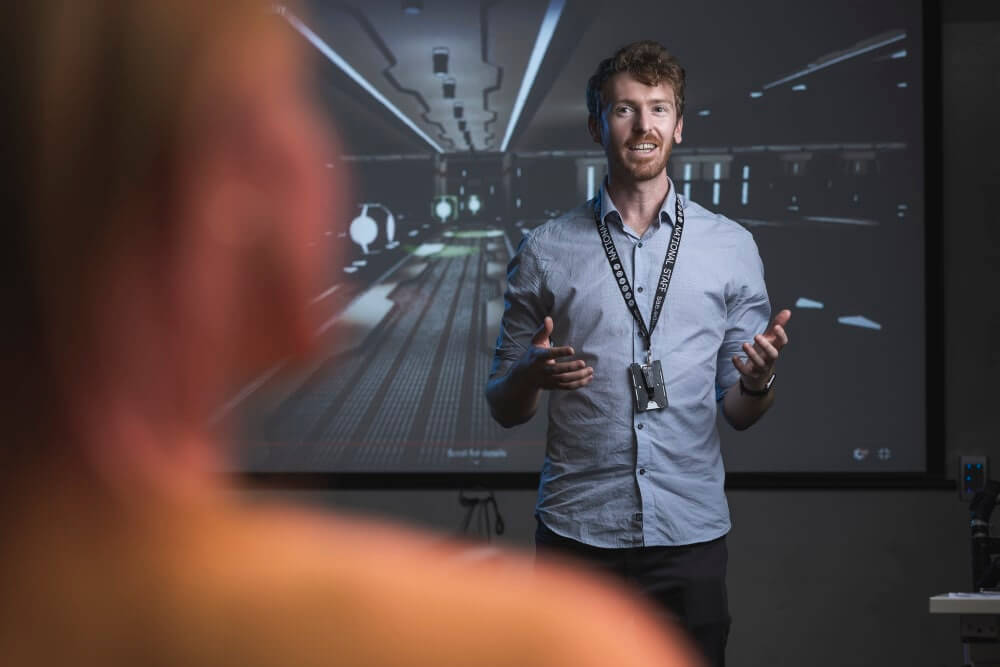
A collaborative learning environment where your teachers are also your mentors.
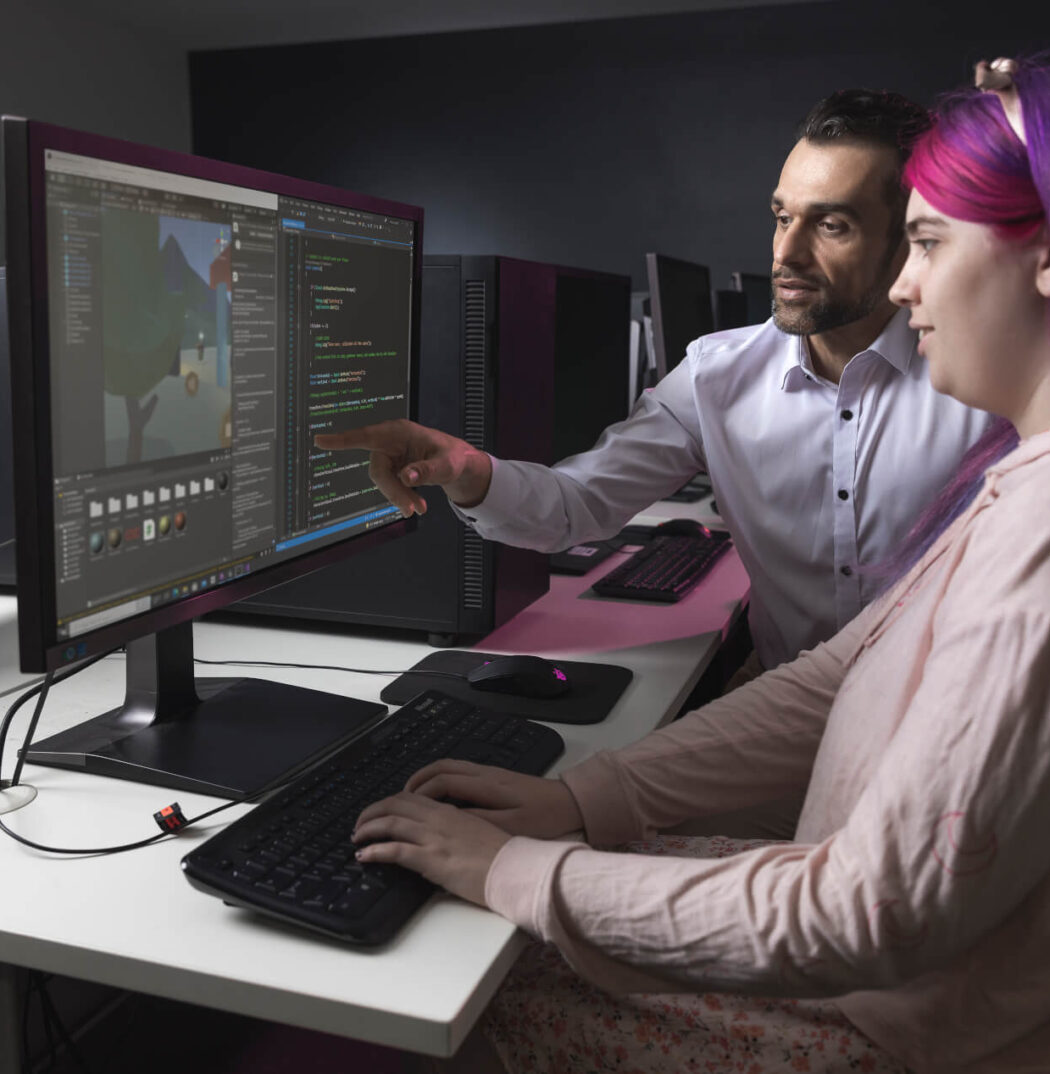
A range of approaches to learning and teaching - virtual and on-campus - that provides flexibility, real-world application and support for students.
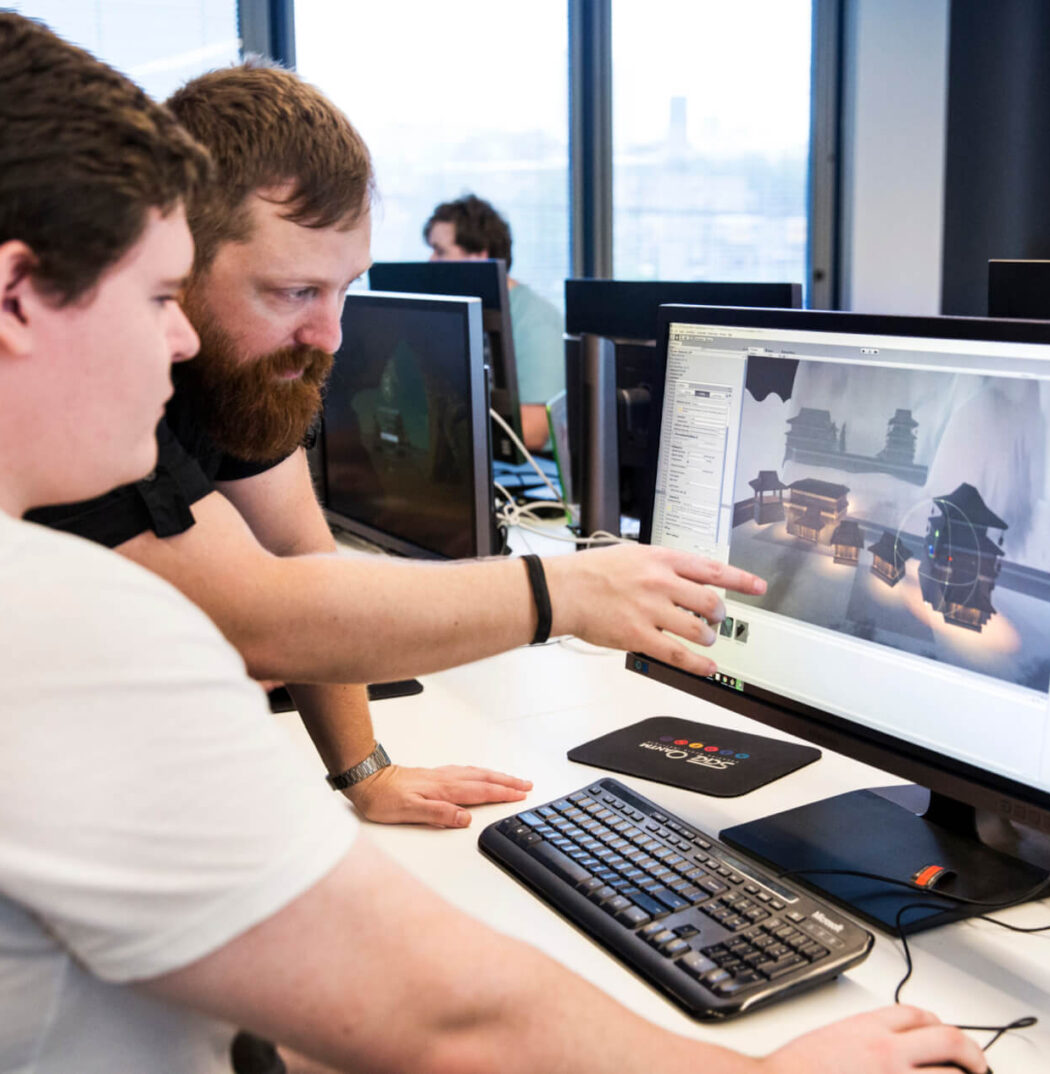
Advanced mentoring in techniques and strategies to use industry software like Unreal Engine, Unity, Blender and Maya.

Technology with creative context
Learn professional IT skills in a university college built on both creative and technical expertise. Studying alongside game developers, animators, audio engineers and designers gives your technical work a creative context, and changes how you approach digital products, systems and experiences.Human-centred from the start
At SAE, you learn to build better technology for people by solving complex IT problems grounded in real needs and experiences -empowering you to make a difference through social impact and responsible outcomes.
Practical, project-based learning
Apply your learning through real-world projects, client briefs, team development and industry-relevant problem-solving.Industry experience
Gain practical experience supported by industry experts who bring current knowledge, professional insight and real-world expectations into your studies.No ATAR required
At SAE we consider your potential and commitment to the Technology Industries, not just your academic history. This is why you can get started with us without a minimum ATAR.Your career in Information Technology begins now
INFORMATION TECHNOLOGY SKILLS
An Associate Degree of Information Technology helps you develop the technical skills needed to design, build and support modern digital solutions. At SAE, you’ll explore areas including cloud computing, cyber security, databases and business analytics while applying your knowledge through practical, industry-inspired projects.
You’ll expand your knowledge across cloud computing, databases, cyber security, business analytics and software development while working on client-based and collaborative projects. Elective units also allow you to tailor your studies towards your interests and career goals.
No. You don’t need previous IT experience to study the Associate Degree of IT at SAE. Whether you’re new to the field or looking to formalise existing skills, you’ll develop your knowledge through hands-on learning in a supportive, collaborative environment.
Yes. The Associate Degree of IIT provides a direct pathway into the Bachelor of Information Technology. After successfully completing our associate degree, you’ll be eligible to continue your studies and further develop your expertise through Work Integrated Learning (industry placements) and a major capstone project.
At SAE, we consider your creative potential and commitment to the Creative Industries, not just your academic history. This is why you don’t need a minimum ATAR to study with us.
At a minimum, successful completion of an Australian Senior Secondary Certificate of Education (Year 12) or equivalent overseas qualification is required for academic entry. Alternative entry pathways may be available if you have not completed high school – chat to our Admissions team to learn about your options.
Yes. Our Associate Degree of Information Technology is available online and on campus at SAE Sydney.
CREDIT AND RECOGNITION OF PRIOR LEARNING
SAE may recognise your prior learning and may grant credit towards satisfying the requirements for a higher-level program. This is applied where previous learning is considered equivalent to the content and learning outcomes prescribed for units within the program.
For full details, please refer to SAE’s policy on recognition of prior learning and credit transfers.