













Diploma of Cyber Security
LAY THE FOUNDATIONS FOR A DYNAMIC CAREER IN CYBER SECURITY
- Online
Online Delivery (Domestic students only)
Built for independent learners who need maximum flexibility without compromising on engagement.
- 2 hours of live online classes plus 1 hour of national content each week.
- Fully virtual with interactive sessions, discussions, and expert support.
- Access SAE’s full suite of digital learning resources from anywhere.
Blended Delivery
Designed for those who want the best of both worlds, structured face-to-face learning with online flexibility.
- Combines 2 hours of live (on-campus or online) classes with 1 hour of national content each week.
- Balances in-person connection with the convenience of remote access.
- Supported by SAE’s online learning tools and self-directed study resources.
National Expertise
No matter how you study, you’ll learn from SAE’s national team of expert, industry-aligned faculty.
- Access top educators and specialists across Australia, wherever they’re based.
- Benefit from national masterclasses, guest lectures, and collaborative learning.
- Tap into deep industry knowledge that goes beyond your local campus.
Units x Costs ($AUD)
8 x $2,999
Annual Course Fee (Indicative)*
(based on 1.0 EFTSL**)
$23,992 AUD
Plus Student Services and Amenities Fee (SSAF)
* The Annual Course Fee (Indicative) is charged against individual units of study which may increase from time to time and does not take into account personal circumstances such as RPL, credit, repeats and some specialised electives.
** EFTSL (Equivalent Full-Time Student Load) is a measure of a full-time student’s study load for a year. A full-time study load equates to 1.0 EFTSL. Typically, a full-time study load at SAE is 8 units of study over the year, each with an EFTSL value of 0.125.
For more information view the SAE Fee Schedule or visit the Fees & Payment page.
Complete your course faster by studying the course units over approximately 7 months (2 trimesters).
Complete your course faster by studying the course units over approximately 7 months (2 trimesters).
Whilst still classified as a full-time study load, you will complete the course units over one year (3 trimesters).
If you want to take a little longer, that’s ok too. We’ll help you work out the best study load to suit your needs.
Note: Part-time is not available for international students.
September 2027
February 2027
May 2027
Your technology career starts with SAE
Course Structure
The Diploma of Cyber Security is a standalone credential or pathway into Bachelor of Computer Science.This unit provides an engaging and practical introduction to the fundamentals of software development, focusing on the concepts, methodologies, and processes involved. Students will learn about the software development lifecycle, various development methodologies, version control systems, teamwork, project management, and the importance of documentation. The unit is highly interactive, featuring a mix of case studies, group activities, and hands-on projects that simulate real-world software development scenarios.
This unit introduces you to the fundamental concepts and techniques of programming using a high- level programming language. You will learn to write, debug, and execute basic programs while developing problem-solving skills essential for computer science. The unit covers variables, data types, control structures, functions, data structures, file input/output (I/O), modules, error handling, and an introduction to object-oriented programming. By the end of the unit, you will be able to develop simple programs and understand core programming principles.
This unit focuses on the fundamental knowledge and skills required by all IT professionals. You will explore basic IT concepts and terminology as well as the hardware and software elements that form the basis of systems from personal computing through to enterprise level. You will also explore how software is developed and used, and the collection, storage and use of data. All these topics will be viewed through a cyber security lens and the unit will conclude by considering the field of cyber security as a holistic discipline.
This unit will introduce you to foundational knowledge and skills for web development which will be useful throughout your studies and career in computer science. You will learn foundational concepts, principles and skill in web development. We will delve into the core concepts of the Document Object Model (DOM), Hyper Text Markup Language (HTML) and its companion Cascading Style Sheets (CSS), and an industry-standard programming language for websites: Javascript. Explore concepts of web design theories and practices including web servers, web databases, web domains, Content Management Systems, web design, web layout, responsive web design, functionality and usability.
Explore the cyber threat landscape and how to detect, prevent and respond to attacks. Build on your foundational knowledge while preparing for the CompTIA Security+ certification.
Use programming and analytics tools to uncover insights from cyber security data. Learn to detect threats, monitor systems, and support decision-making with real-time analysis and visualisation.
Examine the legal and ethical responsibilities of cyber security professionals. Learn about national and international laws, plus the moral considerations of working with sensitive digital information.
This unit explores the concepts of entrepreneurship, innovation and project design. You will develop approaches to identify promising opportunities and actionable strategies to transform them into tangible successes. Through exposure to developing new ideas, processes and ways of working - both individually and in entrepreneurial teams - you will hone skills to put creative ideas into practice and achieve real-world impact.
As Alan Kay explained, "The best way to predict the future is to create it", so let's get at it!
Learn using Industry Tools & Software






Diploma of Cyber Security
Secure the digital world, one system at a time.
The Diploma of Cyber Security provides a focused, hands-on introduction to protecting digital infrastructure in an increasingly interconnected world.
As a standalone credential or pathway into the Bachelor of Computer Science, it equips students with foundational skills in ethical hacking, threat analysis, and security architecture. Delivered in collaboration with industry partners, the program ensures graduates are workforce-ready and aligned with emerging security standards.
Meet your technology mentors
Meet your technology mentors
Gain insider knowledge from trusted experts shaping today’s tech landscape.
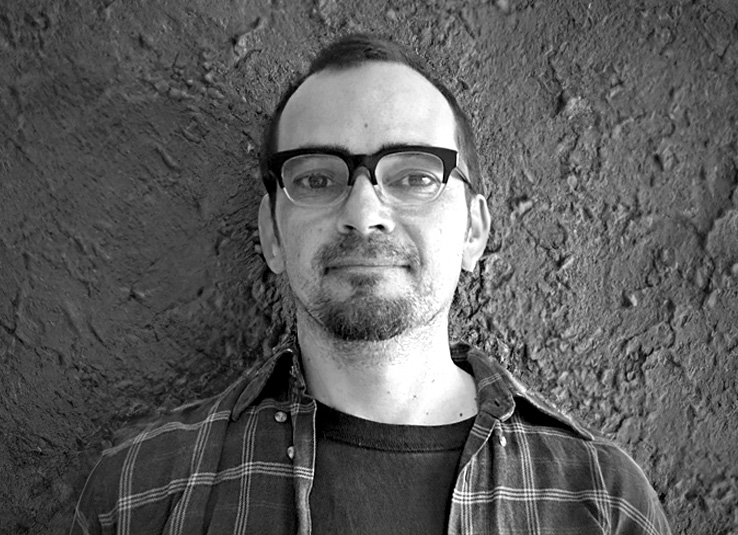
Associate Professor Robert Haubt - Head of School, Information Technology and Creative Computing
Robert is an interdisciplinary educator and researcher with over 20 years’ experience spanning computer science, creative media, the arts and human evolution. As Head of the School of IT & Creative Computing, he explores how creative practice and technology inspire innovation, empower communities, support sustainability and advance social equity through collaboration.

Founder of the Global Rock Art Database, the world's first centralised platform for global rock art research

Held research fellowships at Griffith University and Macquarie University in Digital Technologies

Developed machine learning applications addressing the UN Sustainable Development Goals
Meet your technology mentors
Gain insider knowledge from trusted experts shaping today’s tech landscape.

Dr Hamid Bagha – Lecturer, Computer Science
Hamid works across software engineering, data analytics and research-driven innovation, bringing advanced technical expertise and real-world applications into his teaching. With a PhD in Engineering and IT, his project-based approach helps students connect programming concepts with practical challenges while developing the technical skills, problem-solving capabilities and professional workflows needed for careers in a rapidly evolving technology industry.
Developed an IoT-based system to analyse vehicle emissions using data-driven technologies

Holds a PhD in Engineering and IT from the University of Melbourne and a Master by Research in ICT from Swinburne University of Technology
Recipient of Swinburne’s Vice-Chancellor’s Early Career Researcher Award and recognised for research contributions to Science, Computing and Engineering Technologies
Meet your technology mentors
Gain insider knowledge from trusted experts shaping today’s tech landscape.

Dr Ping-I (Adam) Ho – Senior Lecturer
Adam specialises in game design, critical game studies, and media and cyberculture, exploring how digital technologies shape everyday life and culture. Combining academic research with practical game development, he guides students through concept development, prototyping, playtesting, iteration and production, helping them build both creative confidence and industry-ready skills.
Researches virtual game economies, tabletop role-playing games, and serious games addressing environmental, ethical and cultural issues
Holds a PhD in Digital Cultures from the University of Sydney and has taught at SAE since 2014
Mentored major student projects, with graduates progressing to studios including Halfbrick Studios, Electronic Arts, Mighty Kingdom and Wicked Workshop
Career outcomes
- Information Security Specialist
- Penetration Tester
- Security Architect
- Security Engineer
- Chief Information Officer
- Security Specialist
- Security Consultant
- Cyber Security Manager
- Ethical Hacker
What our students say about SAE


Evie Slattery
SAE Alumni | Current Job: Graphic Designer

Aldo Arechar
SAE Alumni | Current Job: Hans Zimmer's Remote Control Productions company in LA

Bethany Moran
SAE Alumni | UX Designer (NSW Government Department of Planning and Environment)Why study a diploma at SAE?


Your career in Cyber Security starts now
CYBER SECURITY SKILLS
You don’t need an ATAR to study an online computer science degree at SAE University College. In fact, you don’t need an ATAR to gain entry to any of our courses! Check out our full list of entry requirements for more information.
To get a FEE-HELP* loan, you must:
- Be an Australian citizen and study at least part of your course in Australia or be a New Zealand Special Category visa (SCV) holder or permanent humanitarian visa holder and meet the residency requirements. Permanent residents can only get FEE-HELP for approved bridging studies be enrolled in a fee-paying place at a provider that offers FEE-HELP loans be enrolled in an eligible course at your provider by the census date (your provider can tell you if your course is eligible)
- Submit the Request for FEE-HELP loan form to your provider by the census date
- have an available HELP balance.
- Not have undertaken more than 2 years’ worth of higher education study in the last 12 months, unless your provider has assessed you as capable of taking on a higher study load.
- Have a Unique Student Identifier (USI) prior to the first census date to be eligible for FEE-HELP if you are starting a new course in 2022. Applying for a USI is fast and free, and you keep the same USI for life. You can apply for a USI, or check if you already have one, at www.usi.gov.au.
- If you are studying at a non-university higher education provider, you must maintain a pass-rate of 50 percent or above to continue to be eligible for FEE-HELP.
* Terms and conditions apply. For the latest updates regarding FEE-HELP please refer to sae.edu.au/fees
Absolutely, and demand is on the rise.
With cyber threats becoming more sophisticated and frequent, organisations across every industry need skilled cyber security professionals to protect their systems and data. That means strong job prospects, competitive salaries, and opportunities to work in a wide range of sectors.
A Diploma of Cyber Security can open the door to roles such as:
- Information Security Specialist
- Penetration Tester
- Security Architect
- Security Engineer
- Chief Information Officer
- Security Specialist
- Security Consultant
- Cyber Security Manager
- Ethical Hacker
Many SAE students also use the diploma as a pathway into further study, like our Bachelor of Computer Science.
Throughout SAE’s Diploma of Cyber Security, you’ll learn how to identify and respond to cyber threats, analyse security data, and understand the legal and ethical responsibilities that come with protecting systems and information. You’ll also apply your skills in a practical project, giving you hands-on experience with real-world cyber security challenges.
Our cyber security diploma typically takes around 7 months (2 trimesters) of full-time study. It’s a fast, practical way to develop industry-ready skills and start your career in cyber security sooner.
No, there’s more to cyber security than coding. While some roles involve scripting or programming, many cyber security jobs focus on monitoring systems, analysing threats, and responding to incidents. You’ll likely learn some basic coding or scripting, but it’s just one part of a much broader skill set.
No, but AI is already changing how cyber security professionals work.
AI can help automate repetitive tasks, accelerate research, identify patterns, and support faster threat detection and response. But cyber security still relies heavily on human judgement, ethical decision-making, strategic thinking, and the ability to respond to complex or unpredictable threats.
At SAE, AI is embedded thoughtfully across our qualifications to support learning and professional practice. Students use AI to accelerate research, improve workflows, prototype solutions, analyse information, and support project planning – always with human oversight and critical thinking at the centre.
In cyber security, that means learning not only how to work with emerging AI tools, but also how to understand their risks, limitations, and real-world applications in defending systems and data.
Yes, you can! SAE’s Diploma of Cyber Security is designed to offer the same structured, hands-on, and expert-led learning that you’d receive at any SAE campus, with the added flexibility of studying from home.
Not at all. Many students start a cyber security diploma with little to no technical background.
At SAE, the course is designed to build your skills from the ground up, starting with the fundamentals of IT and networking before moving into more specialised cyber security concepts.
Want more info? Have questions to ask? Our Course Advisors are here to help – book a call today!
CREDIT AND RECOGNITION OF PRIOR LEARNING
SAE may recognise your prior learning and may grant credit towards satisfying the requirements for a higher-level program. This is applied where previous learning is considered equivalent to the content and learning outcomes prescribed for units within the program.
For full details, please refer to SAE’s policy on recognition of prior learning and credit transfers.